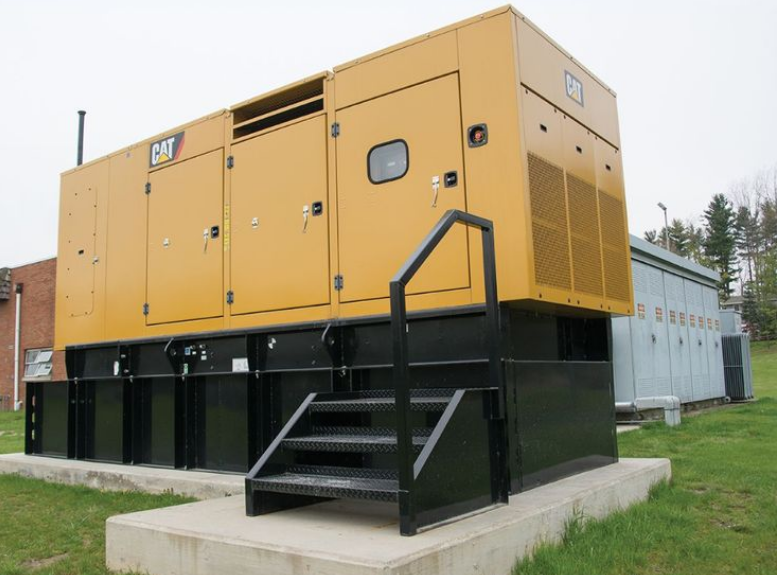
A generator that starts is not the same as a generator that’s ready. In South Africa, where power interruptions are part of normal operations planning, facilities can’t afford “it ran last month” confidence. A standby set must take load cleanly, hold voltage and frequency under stress, switch safely through the ATS, and run long enough to prove cooling, fuel delivery and control stability. That’s what diesel generator load bank testing is for. It turns assumptions into evidence.
This article explains why load bank testing matters, how ATS maintenance protects safe changeover, and what a practical commissioning checklist should include for facilities managers running hospitals, retail sites, logistics DCs and multi-site portfolios.
Why “Starts” Don’t Equal “Ready”
A light no-load run tells you very little. Most generator issues show up when the set is forced to do real work, including:
- Wet stacking: running too lightly can leave unburnt fuel and soot in the exhaust, reducing efficiency and creating future faults.
- Overheating under load: marginal cooling systems often look fine at idle, then fail when heat rises.
- Voltage and frequency instability: regulators and governors can drift and only reveal problems under step loads.
- Fuel supply restrictions: blocked filters and weak lift pumps might cope at low demand, then starve at higher load.
- Protection trips: low oil pressure, high coolant temperature, or sensor issues often trigger only during sustained operation.
- Switching failures: an ATS that is dirty, worn, or misconfigured can fail the changeover even if the generator itself is perfect.
In short: a standby set that “starts” is a partial test. A standby set that “takes load” and stays stable is the one you can rely on.
The risk of untested standby power
When backup power fails, the consequences are rarely limited to inconvenience. For facilities, it can mean:
- lost cold chain and spoilage
- downtime and SLA penalties
- damaged IT equipment from unstable power transfer
- health and safety issues (especially healthcare and high-occupancy sites)
- reputational damage and compliance exposure
This is why testing must be planned and documented. If you’re accountable for uptime, you need proof.
Load bank theory: what you’re actually testing
A load bank is a controlled electrical load that “forces” the generator to work at specific percentages of its rated capacity. This proves performance under realistic conditions without relying on your building load to be present or predictable.
A proper test validates:
- Voltage regulation: stability and acceptable deviation under load
- Frequency control: the ability to hold frequency as load steps change
- Temperature management: cooling system integrity under sustained heat
- Fuel delivery: filtration, lift pump, injectors, and fuel quality resilience
- Exhaust condition: evidence of wet stacking or poor combustion
- Control and alarms: sensors and safety systems behave correctly when stressed
It’s also a good opportunity to trend the unit over time, so you can spot decline before it becomes failure.
Step-by-step: diesel generator load bank testing (a practical approach)
A useful test isn’t about “how long can it run”. It’s about a repeatable procedure and documented outcomes.
1) Pre-test checks (before you apply load)
- Verify oil level and condition (and check for fuel dilution smell)
- Check coolant level and visible leaks
- Inspect belts, hoses, clamps and radiator cleanliness
- Confirm battery health, terminals and charging voltage
- Confirm fuel level and check for water contamination
- Verify earth connections and cable integrity
- Confirm control panel alarms are functional and date/time are correct
- Confirm ATS is in correct mode and site safety measures are in place
2) Warm-up and baseline readings
Start the generator and allow warm-up. Record:
- voltage and frequency at no-load
- oil pressure
- coolant temperature
- battery charging rate
- exhaust smoke behaviour
3) Load steps and stability checks
Apply load in stages, for example:
- 25% load
- 50% load
- 75% load
- 100% load (if safe and required by your compliance plan)
At each stage, allow stabilisation and record:
- voltage and frequency stability
- temperature rise and control response
- engine sound and smoke behaviour
- any alarm events or irregularities
4) Sustained run and heat-soak
The value of load bank testing is the sustained run. A shorter “tick-box” test can miss:
- slow coolant rise
- marginal fan performance
- fuel starvation at sustained demand
- thermal shutdown conditions
5) Controlled unload and cool-down
Remove load in stages and allow cool-down before shutdown. This protects the engine and turbo components and prevents false post-test issues.
Pass/Fail Criteria That Stand Up to Audits
Facilities often ask: “What counts as a pass?” The answer should be defined before testing, not guessed afterwards. A credible test uses thresholds that can be explained, repeated, and presented during audits.
A robust pass/fail framework includes:
- Start and accept load within target time (as defined by your facility requirement)
- Stable voltage and frequency under each load step
- No nuisance trips or critical alarms during sustained load
- Cooling system holds within safe operating range
- No excessive smoke or evidence of wet stacking under meaningful load
- ATS changeover operates correctly without arcing, sticking, or abnormal heat
- Post-test inspections show no leaks, abnormal smells, or loose connections
If any section fails, the test is still valuable, because it tells you exactly what to fix before the next outage.
ATS maintenance: the part people forget until it fails
Even a perfect generator is useless if the ATS doesn’t transfer power reliably. ATS maintenance matters because it’s a mechanical switching device operating under high current. Contact wear and contamination can cause:
- delayed transfer
- partial contact and overheating
- failure to switch back
- nuisance alarms
- arcing that damages the switch
What ATS maintenance should include
- Visual inspection for discoloration, soot, or heat damage
- Contact inspection and cleaning (where design allows)
- Torque checks on cable lugs and terminations
- Verification of control wiring and sensing lines
- Functional tests of transfer and re-transfer
- Verification of timers, delays, and settings to match site requirements
- Infrared scan (where available) to identify hot spots under load
For multi-site operations, standardising ATS service routines is one of the easiest ways to reduce risk.
Fuel, cooling and exhaust checks that prevent failures
Fuel system basics (often the real culprit)
- Replace filters to interval, not when the generator struggles
- Drain water separators and check for microbial growth
- Verify tank breathers and fuel pickup integrity
- Ensure fuel quality management is in place for standby tanks (fuel “goes stale”)
Cooling system basics (why marginal sets fail under load)
- Clean radiators and cooling packs properly (dust build-up is common)
- Pressure test caps and check hose integrity
- Verify fan belt tension and fan clutch behaviour (if applicable)
- Confirm coolant concentration and inhibitor health
Exhaust and wet stacking indicators
Light-load “exercise runs” can create soot build-up and unburnt fuel residue. Load bank testing is one of the best ways to clear wet stacking and confirm healthy combustion under real demand.
Reporting and compliance evidence
A professional test produces evidence you can file, trend, and present. The report should include:
- test date, site, unit details and rated capacity
- load stages and duration at each stage
- voltage/frequency readings and stability notes
- oil pressure and temperature trends
- alarm events and corrective recommendations
- ATS test results and observations
- clear pass/fail summary and next actions
This turns generator maintenance into a managed risk programme, not reactive firefighting.
AMCS service options for standby power
AMCS can support facilities with:
- planned diesel generator load bank testing programmes
- ATS maintenance and changeover verification
- commissioning checklists for new installs or relocated sets
- remedial repairs based on test outcomes
- multi-site scheduling and standardised reporting for portfolio management
Whether you run one site or twenty, the goal is the same: predictable readiness you can prove.
Conclusion: readiness is proven, not assumed
Standby power is insurance. But like any insurance, it only works if it’s real. Diesel generator load bank testing proves your generator can do what it’s meant to do, and ATS maintenance ensures the power actually gets to your building safely and reliably.Ready to replace assumptions with evidence?
Enquire today about diesel generator load bank testing, ATS maintenance, and commissioning checklists with AMCS.